
Connecting energy
and progress
GreenLink is more than just connecting two regions – it’s a vision. A 450-kilometer-long high-performance corridor connecting energy, water, hydrogen, and data across provincial borders.
A Modular Approach
01
PHASE
PLANNING
02
PHASE
EXPANSION
03
PHASE
COMPLETION
PROJECT OVERVIEW
With a total length of approximately 450 kilometers, GreenLink is one of Africa’s most ambitious infrastructure projects. The corridor connects the power generation site in the Northern Cape with the industrial and urban centers of the Western Cape.
It is the link between the four major projects of the KAHRE Renewable Energy Group and enables the transport of green electricity, hydrogen, ammonia, water and data – all along a common, state-of-the-art route.
The lifeline
between energy,
industry and the
future.
GreenLink is the backbone of a new energy economy – a symbol of connection, progress, and responsibility.
CORE COMPONENTS
integration of several systems

High-voltage
power line
(HV Corridor)
Hydrogen
and ammonia
pipelines
Water
pipeline
Data and fiber
optic network
(Digital Corridor)
Transport
and service
infrastructure
LOCATION
THE
GREEN LINK
CORRIDOR
The GreenLink corridor begins at the southern edge of the KTE.energy project area in the Northern Cape and runs for approximately 450 kilometers along the Sishen – Port Saldanha railway line towards the southwest.
It passes through vast, sparsely populated areas, follows existing easements, and finally reaches the coastal region of the Western Cape at Velddrif, in the immediate vicinity of the Velddrif projects, Water & Power and EcoVision Velddrif.
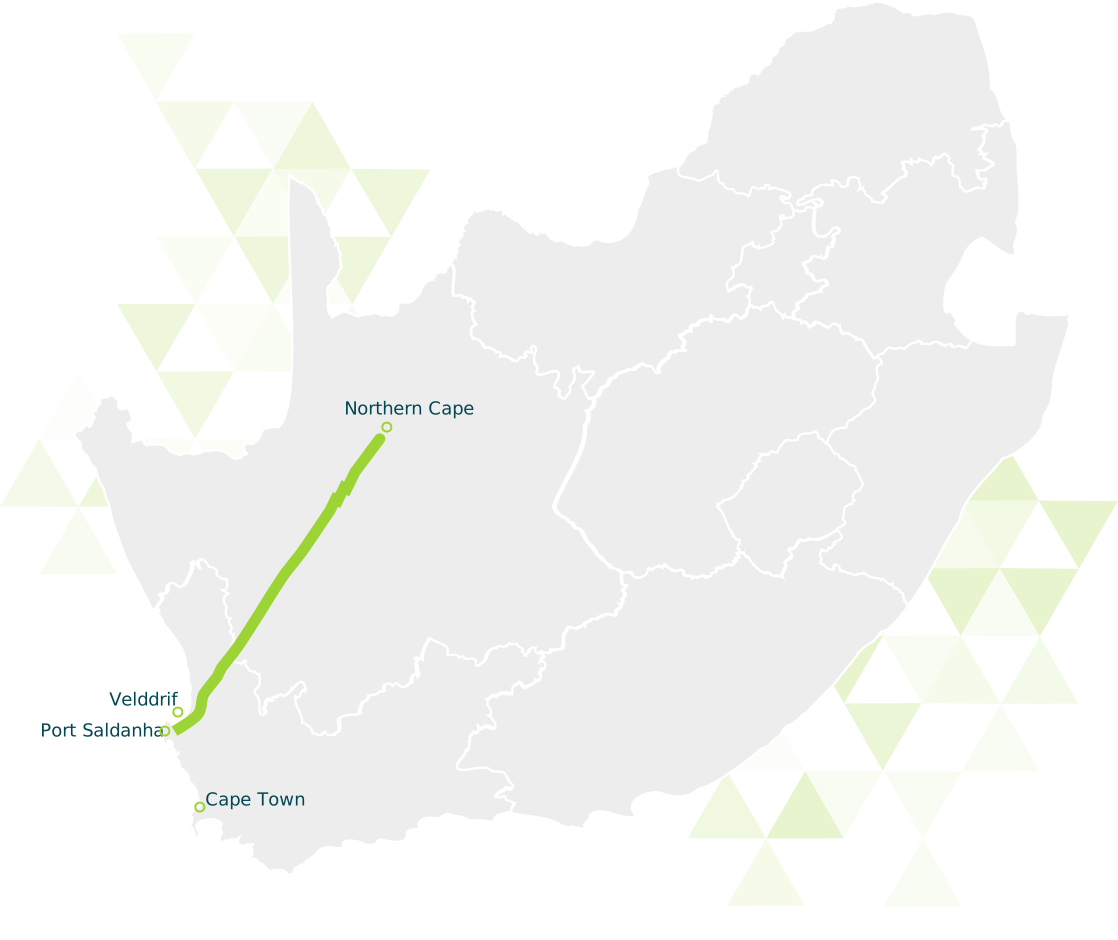
GreenLink doesn’t just connect provinces – it connects people, markets and opportunities.
APPROXIMATELY
450 KM
TOTAL
LENGTH
UP TO
20 GW
POWER TRANSMISSION
CAPACTY
FROM
2025
To 2040 PROJECT
PHASES
UP TO
5000
JOB directly
and indirectly
STRATEGIC IMPORTANCE
National
Infrastructure
plan 2050
GreenLink is an integral part of the South African Hydrogen Society Roadmap (HSRM) and the National Infrastructure Plan 2050.
It is coordinated with government agencies, research institutions, and private stakeholders to connect national and international energy and export strategies.